Compounded GLP-1 rules in 2026: what patients should ask before switching
The short answer
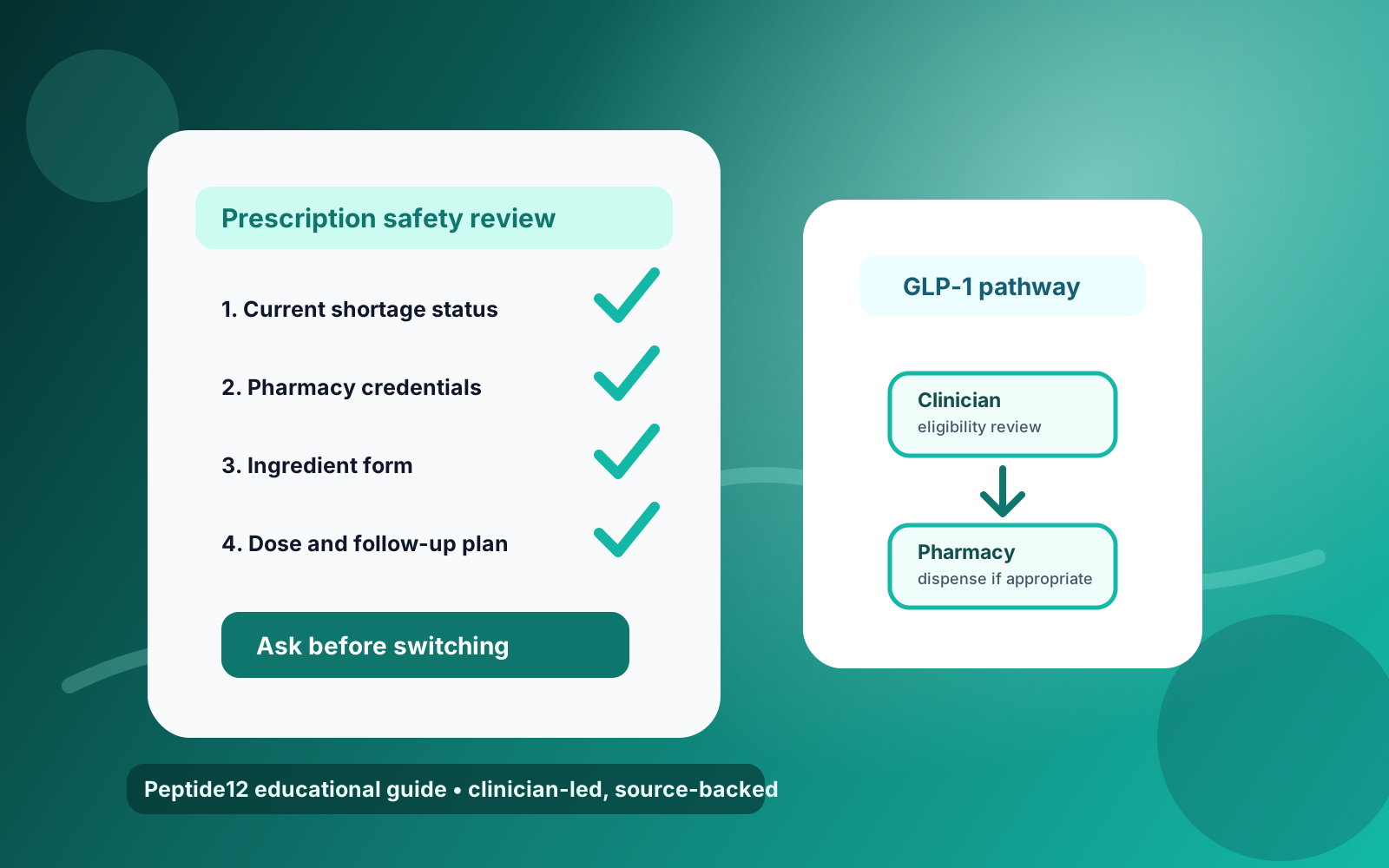
Compounded GLP-1 access is no longer a simple yes-or-no question. It depends on the active ingredient, current FDA shortage status, pharmacy category, state rules, and whether a licensed clinician determines a patient-specific prescription is appropriate. Patients should treat any “always available” or “FDA-approved compounded GLP-1” claim as a red flag.
Why this topic changed
During GLP-1 supply shortages, some patients could not reliably fill brand-name prescriptions such as Wegovy, Ozempic, Zepbound, or Mounjaro. Compounding pharmacies became part of the access conversation because federal law allows certain compounding when a drug appears on the FDA drug shortage list and other conditions are met.
That does not mean every compounded version remains available indefinitely. When shortage status changes, the legal room for routine copies may narrow. State pharmacy boards, federal rules, and individual pharmacy policies can also change how prescriptions are filled.
For patients, the practical question is not “is compounding good or bad?” It is: what exactly is being prescribed, who is dispensing it, and what happens if availability changes?
Compounded GLP-1s are not FDA-approved brand copies
This is the most important safety distinction.
- FDA-approved brand medications are reviewed for a specific product, indication, formulation, labeling, manufacturing process, and risk information.
- Compounded medications are prepared by a pharmacy for a prescription. They are not FDA-approved as finished drug products, even when the active ingredient is familiar.
A conservative telehealth program should state that clearly. It should not imply that compounded semaglutide or tirzepatide is “FDA-approved,” “generic Wegovy,” or “generic Zepbound.” Those phrases can confuse patients about regulation, insurance coverage, and safety oversight.
If you are comparing options, start with Peptide12's broader explainers on compounded GLP-1s, semaglutide injection, tirzepatide injection, and peptide therapy cost.
The patient checklist: 9 questions to ask before switching
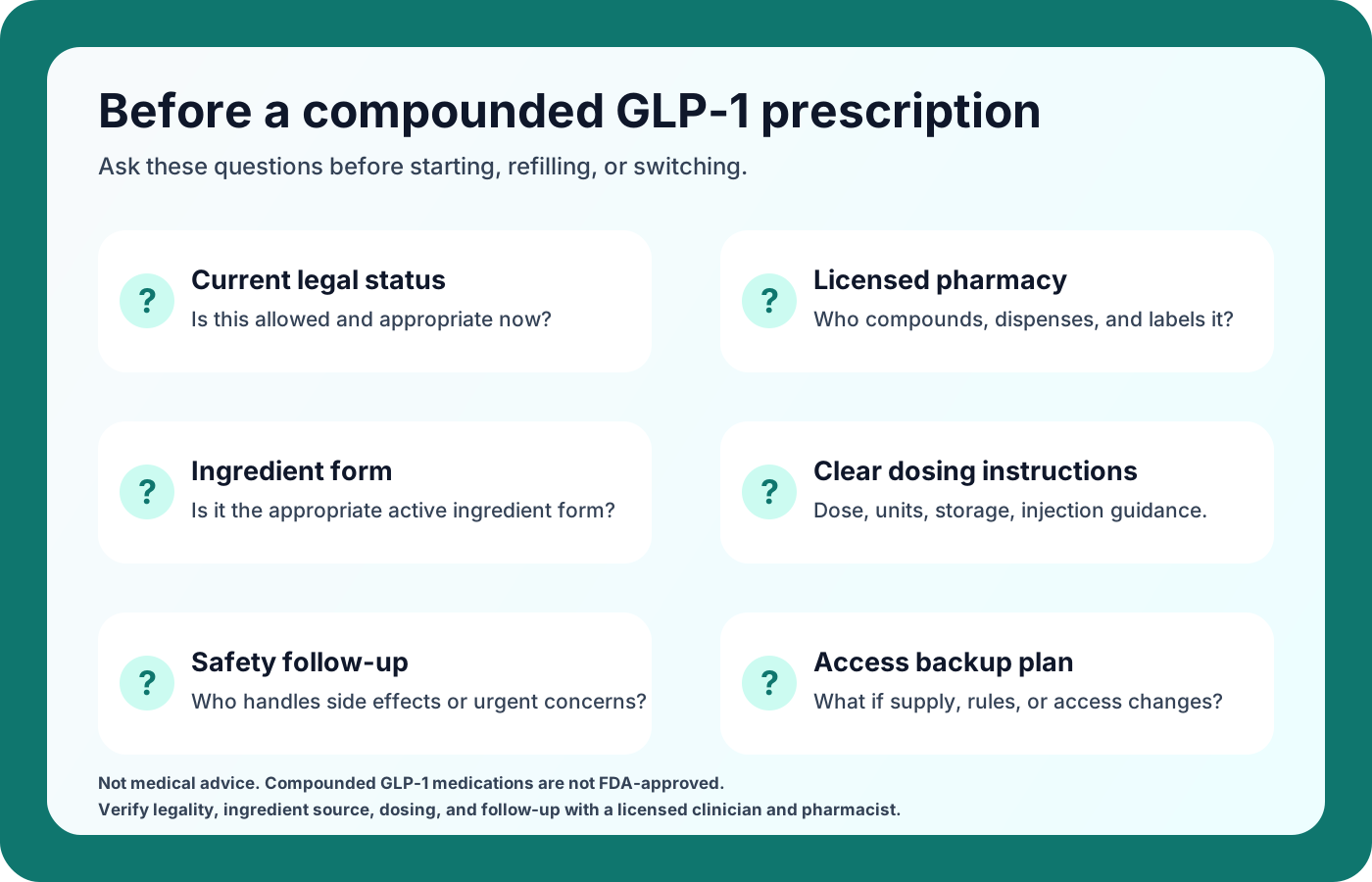
Use these questions before starting, refilling, or switching from a brand GLP-1 to a compounded option.
| Question | Why it matters |
|---|---|
| Who is the prescribing clinician? | A prescription-only medication should involve a licensed clinician who reviews eligibility, contraindications, and follow-up needs. |
| Which pharmacy dispenses it? | The pharmacy should be identifiable, licensed/registered as applicable, and able to answer quality questions. |
| Is the ingredient semaglutide or tirzepatide base? | FDA has warned about some products using salt forms such as semaglutide sodium or acetate, which are not the same as the approved active ingredient. |
| What dose and concentration are on the label? | Many dosing errors happen when concentration, units, and injection volume are unclear. |
| What training is provided? | Patients need clear instructions for storage, measurement, missed doses, and when to call the clinician. |
| What side effects should trigger a call? | Severe abdominal pain, persistent vomiting, allergic symptoms, dehydration, or signs of gallbladder problems need prompt medical guidance. |
| How are adverse events reported? | Serious reactions should be documented and reported through the appropriate channels. |
| What if availability changes? | You need a transition plan before a refill deadline, not after you run out. |
| What are non-compounded alternatives? | Brand medication, insurance prior authorization, lifestyle care, other obesity medications, or no medication may be safer for some patients. |
Red flags in GLP-1 marketing
Be careful with any clinic, marketplace, or social post that says:
- “FDA-approved compounded semaglutide”
- “No prescription needed”
- “Research peptide for human weight loss”
- “Same as Ozempic with no side effects”
- “Guaranteed 20% weight loss”
- “Unlimited refills regardless of FDA rules”
- “One dose works for everyone”
The safer standard is boring on purpose: licensed clinical review, transparent pharmacy sourcing, clear labeling, conservative dosing, adverse-event guidance, and a backup plan.
Who may not be a good candidate
A clinician should screen for medical history and medication interactions before prescribing any GLP-1 pathway medication. Common reasons for extra caution or avoidance include:
- Personal or family history of medullary thyroid carcinoma or MEN2
- Prior pancreatitis or concerning unexplained abdominal symptoms
- Severe gastroparesis or significant gastrointestinal motility problems
- Pregnancy, plans to become pregnant, or breastfeeding
- Type 1 diabetes or history of diabetic ketoacidosis
- Severe dehydration risk, eating disorder concerns, or inability to follow dosing instructions
- Allergy to the active ingredient or product components
This list is not a diagnosis tool. It is a reminder that eligibility is individualized and can change over time.
What to do if your current refill is uncertain
If you are already using a compounded GLP-1 and hear that supply or rules may change, do not self-adjust your dose or buy from a research-chemical seller. A safer plan is:
- Ask your clinician for your current medication details: active ingredient, dose, concentration, pharmacy, and next refill date.
- Request a transition plan: brand prescription, prior authorization, cash-pay option, medication pause, dose change, or alternative therapy.
- Keep follow-up labs and vitals current when your clinician recommends them.
- Report side effects early, especially persistent vomiting, severe abdominal pain, fainting, allergic symptoms, or dehydration.
- Avoid gray-market products that are labeled for research use, sold without a prescription, or shipped without pharmacy labeling.
Peptide12's online peptide therapy process is built around intake, clinician review, pharmacy dispensing when appropriate, follow-up, and safety monitoring rather than one-click medication sales.
AEO quick comparison: brand vs compounded GLP-1
| Topic | FDA-approved brand medication | Compounded medication |
|---|---|---|
| FDA approval | Approved product with reviewed labeling and manufacturing | Not FDA-approved as a finished product |
| Availability | Depends on manufacturer supply, insurance, and pharmacy inventory | Depends on compounding law, shortage status, pharmacy policies, and prescription need |
| Prescriber role | Required | Required |
| Dosing device | Usually pen or manufacturer device | Varies by pharmacy and prescription; clear instructions are essential |
| Best fit | Patients who can access and safely use the approved product | Select patient-specific circumstances when legally and clinically appropriate |
| Main patient question | “Can I access and afford the approved product?” | “Is this legally available, properly sourced, clearly labeled, and clinically appropriate for me?” |
Bottom line
Compounded GLP-1s can be part of a legitimate care discussion, but they require more questions — not fewer. In 2026, patients should be wary of any provider that treats shortage rules, pharmacy sourcing, dosing, or safety follow-up as minor details.
A responsible program should be able to explain the prescription pathway, the pharmacy pathway, the safety pathway, and the backup pathway in plain language before you pay for medication.