Retatrutide FDA approval status: what online weight-loss patients should know
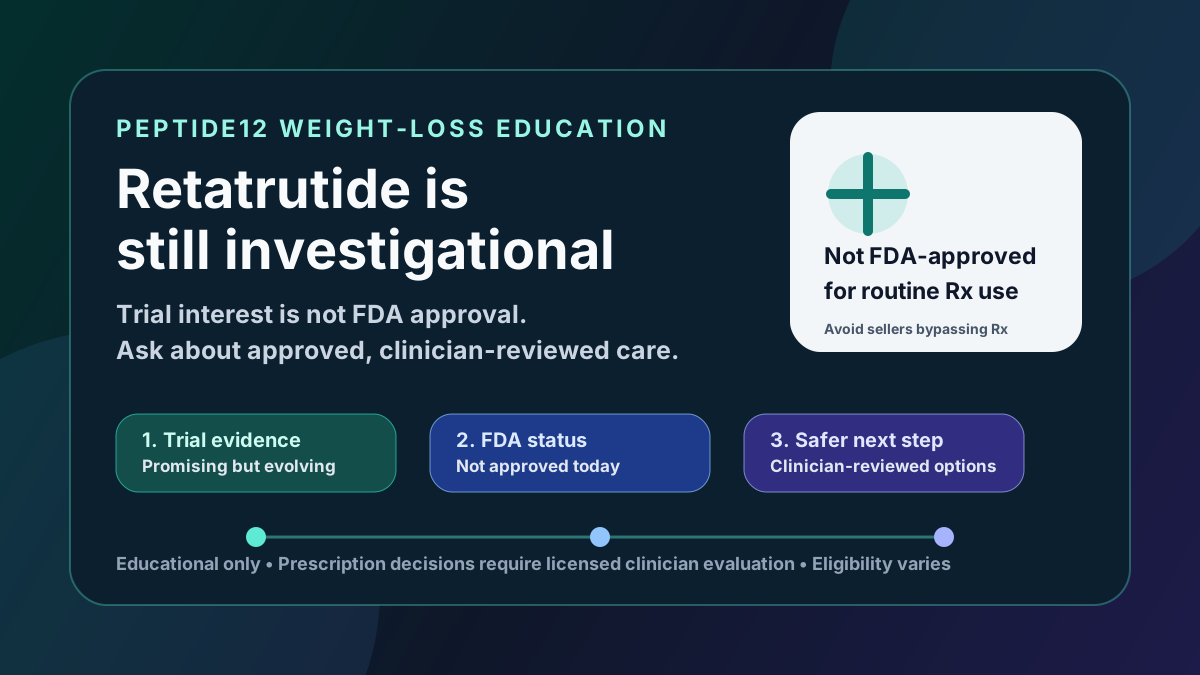
Retatrutide is not an FDA-approved weight-loss medication. It is an investigational drug being studied in clinical trials. If you see retatrutide sold online as a routine prescription, “research peptide,” or no-prescription shortcut, treat that as a safety and regulatory red flag.
The search interest is real. Retatrutide has been discussed widely because early and ongoing studies suggest it may become an important obesity medication if it earns regulatory approval. But trial promise is not the same as an approved treatment plan for an individual patient today.
The short answer: what is retatrutide?
Retatrutide, also known as LY3437943, is an investigational medication from Eli Lilly being studied for obesity and related cardiometabolic conditions. It is often described as a "triple agonist" because it is designed to activate three hormone receptor pathways: GIP, GLP-1, and glucagon.
That mechanism is why people compare it with GLP-1 medications. It is also why the regulatory status matters. A medication can look promising in a study and still require more evidence, FDA review, manufacturing controls, labeling, postmarketing plans, and prescribing guidance before it becomes an approved product.
Is retatrutide FDA-approved in 2026?
No. As of this update, retatrutide is investigational and is not FDA-approved for weight loss. It should not be marketed to patients as if it were interchangeable with FDA-approved products.
A practical way to think about the status:
| Question patients ask | Conservative answer |
|---|---|
| "Is retatrutide approved?" | No, not for routine commercial prescribing. It remains investigational. |
| "Can a trial result prove it is safe for me?" | No. Trials inform medical evidence, but individual eligibility still requires clinician review and approved labeling once available. |
| "Is a research-chemical vial the same as a prescription?" | No. No-prescription or research-only sellers are not a substitute for regulated prescribing and pharmacy dispensing. |
| "What can I discuss now?" | Approved weight-management options, contraindications, follow-up monitoring, and safer alternatives when medication is appropriate. |
Why retatrutide is getting attention
The attention comes from clinical research. A phase 2 obesity trial published in the medical literature reported substantial average weight reduction in studied participants receiving retatrutide compared with placebo. Lilly and ClinicalTrials.gov also list ongoing or completed studies evaluating retatrutide in larger phase 3 programs and related populations.
Those results are important, but they should be read carefully:
- Study participants are selected by trial criteria, not by a social media checklist.
- Averages do not predict one person’s result.
- Side effects, discontinuations, dose escalation, and long-term monitoring matter as much as headline weight-loss numbers.
- FDA approval, final labeling, contraindications, and commercial availability are separate steps.
For patients, the safest takeaway is not "find retatrutide now." It is "ask what evidence-based, approved care is appropriate now, and keep an eye on investigational options through legitimate medical channels."
Retatrutide vs tirzepatide: the regulatory difference matters
Retatrutide and tirzepatide are often compared because both involve incretin pathways and weight-management research. The key difference for patients is status.
| Topic | Tirzepatide | Retatrutide |
|---|---|---|
| Receptor activity | GIP and GLP-1 receptor agonist | GIP, GLP-1, and glucagon receptor agonist under study |
| FDA-approved products | Approved products exist for type 2 diabetes and chronic weight management under specific labels | Not FDA-approved for weight loss as of this update |
| Patient access | Prescription-only through a clinician when appropriate | Clinical trial context; avoid no-prescription online sellers |
| What to ask about | Eligibility, contraindications, side effects, dose schedule, pharmacy source, cost, follow-up | Trial status, why it is not commercially approved, and safer approved alternatives |
This does not mean tirzepatide is right for everyone. It means the conversation can occur within an approved medication framework when a licensed clinician determines it is appropriate.
Related Peptide12 resources:
- GLP-1 weight loss options
- Tirzepatide injection
- Semaglutide injection
- Compounded GLP-1 shortage rules in 2026
- What happens when you stop GLP-1 medication?
Online retatrutide red flags
Retatrutide searches often lead to pages that blur the line between trial education, supplement-style marketing, and research-chemical sales. That is risky for a medication class where dosing, side effects, storage, patient selection, and follow-up matter.
Be cautious if a site:
- Sells retatrutide without a licensed clinician evaluation.
- Calls it "for research only" while implying personal weight-loss use.
- Avoids explaining that retatrutide is not FDA-approved for weight loss.
- Uses before-and-after promises, guaranteed outcomes, or extreme claims.
- Does not identify the prescriber, pharmacy pathway, active ingredient, or adverse-event process.
- Pushes patients to mix, dose, or inject without medical supervision.
- Claims compounded or research products are "FDA-approved retatrutide."
FDA has specifically warned about concerns with unapproved GLP-1 drugs used for weight loss, and FDA’s compounding guidance is clear that compounded drugs are not FDA-approved in the same way approved finished drug products are.
What side effects and safety questions are likely to matter?
Because retatrutide is investigational, patients should not rely on influencer dosing stories. Trial reports and the broader incretin medication class suggest the safety conversation should include gastrointestinal symptoms, hydration, gallbladder and pancreas concerns, glucose-related issues, heart rate changes, medication interactions, pregnancy planning, and whether the patient has conditions that would have excluded them from a trial.
A clinician may ask about:
- personal or family history of medullary thyroid carcinoma or MEN2 where relevant to incretin drug labeling;
- pancreatitis, gallbladder disease, severe gastrointestinal disease, kidney disease, or dehydration risk;
- diabetes medications and hypoglycemia risk;
- pregnancy, plans to become pregnant, or breastfeeding;
- eating disorder history or unsafe weight-loss goals;
- current medications, supplements, and prior reactions to GLP-1 or GIP/GLP-1 therapy.
This is not a personal eligibility checklist. It is a reminder that a medication with meaningful metabolic effects deserves medical screening, not a checkout page.
What to do if you are interested in retatrutide
If retatrutide is what brought you into weight-loss research, use that interest to start a safer conversation.
Ask a licensed clinician:
- Do I meet criteria for medical weight-management treatment? BMI, weight-related conditions, labs, medication history, and goals matter.
- Are approved options appropriate? Semaglutide, tirzepatide, and other obesity medications have different labels, contraindications, costs, and access issues.
- What are my red flags? Side effects, gallbladder symptoms, pancreatitis risk, diabetes medications, pregnancy plans, and mental health history can change the plan.
- How will progress be monitored? Responsible care includes follow-up, nutrition support, side-effect management, and medication review.
- What happens if I need to stop? Maintenance planning should be part of the discussion before starting.
How Peptide12 approaches emerging weight-loss medications
Peptide12 does not treat investigational hype as a substitute for regulated care. Weight-loss medication should be prescription-only, clinician-reviewed, and matched to the patient’s medical history. Eligibility and availability vary, and treatment is prescribed only when a licensed clinician determines it is appropriate.
When patients ask about retatrutide, a responsible answer is transparent: it is not approved today, trial data are still evolving, and safer current decisions should focus on approved options, verified pharmacy pathways, side-effect counseling, and follow-up.
FAQs
Is retatrutide FDA-approved for weight loss?
No. Retatrutide is investigational and is not an FDA-approved weight-loss medication as of this update. It is being studied in clinical trials, so patients should not treat online retatrutide offers as equivalent to an approved prescription drug.
Can I get retatrutide from an online clinic?
Be cautious. A responsible online clinic should not present investigational retatrutide as an approved commercial treatment. If a site sells retatrutide without a clinician evaluation, prescription, transparent pharmacy pathway, or clear regulatory explanation, consider it a red flag.
How is retatrutide different from tirzepatide?
Tirzepatide activates GIP and GLP-1 receptors and has FDA-approved products for type 2 diabetes and chronic weight management. Retatrutide is being studied as a GIP, GLP-1, and glucagon receptor agonist, but trial data do not make it FDA-approved or broadly available.
What should I ask a clinician instead of buying retatrutide online?
Ask whether an approved option such as semaglutide or tirzepatide is medically appropriate, what contraindications or side effects apply to you, what lab or follow-up monitoring is needed, and how pharmacy dispensing and medication availability are verified.
Sources
- PubMed: Triple-Hormone-Receptor Agonist Retatrutide for Obesity — A Phase 2 Trial
- ClinicalTrials.gov: NCT04881760, Phase 2 study of LY3437943 in obesity or overweight
- ClinicalTrials.gov: NCT05882045, Phase 3 retatrutide study in obesity and cardiovascular disease
- Lilly: What to know about retatrutide
- FDA: FDA’s Concerns with Unapproved GLP-1 Drugs Used for Weight Loss
- FDA: Compounding and the FDA, Questions and Answers