Topical hyaluronic acid benefits for skin quality: what it can and cannot do
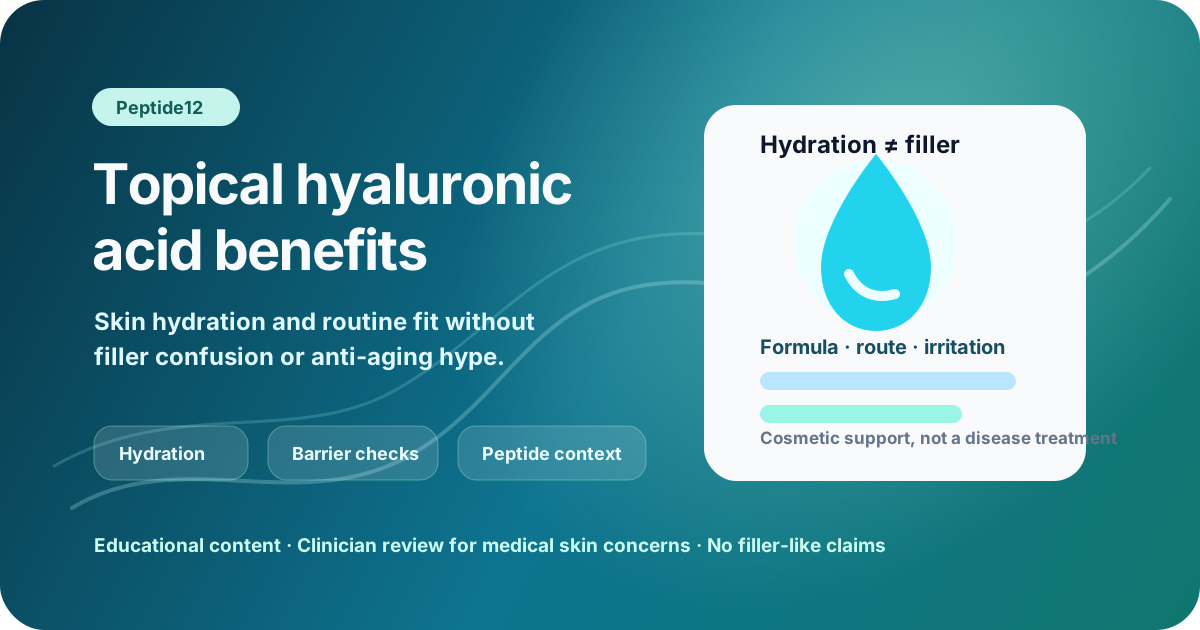
Topical hyaluronic acid can help with hydration and skin feel, but it should not be promoted like a filler, prescription treatment, peptide therapy, or guaranteed anti-aging procedure. The practical benefit is narrower and more useful: HA is a water-binding skincare ingredient that may support dryness, plump-looking skin, and a smoother-feeling routine when the formula fits the person's skin barrier.
For Peptide12 patients, the most common question is not simply whether hyaluronic acid "works." It is how a hydration serum fits around clinician-reviewed topical options such as GHK-Cu topical foam, NAD+ face cream, retinoids, acids, sunscreen, procedures, and irritation history.
The short answer: what topical hyaluronic acid can do
Hyaluronic acid is a naturally occurring water-binding molecule. In topical skincare, it is usually used as a humectant: an ingredient that helps attract and hold water in the surface layers of the skin or in the product film.
A conservative way to describe topical HA benefits is:
- it may support short-term hydration and a smoother skin feel;
- it may help a dry or aging-skin routine feel more comfortable when paired with moisturizer;
- it can be a lower-friction step than stronger active products for some people;
- it does not diagnose or treat a medical skin condition;
- it is not the same thing as an injectable hyaluronic-acid filler.
The distinction matters because "hydration" and "anti-aging" claims can easily drift into overpromising. A topical serum cannot be assumed to rebuild collagen, erase wrinkles, replace procedures, repair wounds, or treat eczema, rosacea, acne, burns, scars, or hair loss.
What the evidence says without overclaiming it
A 2022 review in Dermatologic Therapy summarized literature on topical hyaluronic acid for skin quality and signs of skin aging. It describes HA as a common cosmeceutical ingredient for hydration and cosmetic skin support, while also noting that the reviewed product landscape includes specific formulations and industry involvement.
A 2024 randomized trial in older adults with dry skin compared low molecular weight HA, high molecular weight HA, and vehicle moisturizer over four weeks. The low molecular weight HA group showed higher skin hydration measurements than the high molecular weight HA and vehicle areas, while transepidermal water loss and symptom scores did not significantly differ among groups. No side effects were reported in that small study.
That evidence supports a balanced conclusion: topical HA can be useful for hydration-focused routines, especially dry-skin routines, but the result depends on formula, molecular weight, vehicle, baseline skin condition, and the outcomes being measured.
Topical HA serum is not a hyaluronic-acid filler
The word "hyaluronic" appears in both topical serums and many dermal fillers, but the route and regulation are different.
FDA describes dermal fillers as medical device implants used by injection for specific appearance-related indications in adults. FDA also warns about risks, including the rare but serious risk of unintentional injection into a blood vessel, and states that needle-free devices are not approved for injecting dermal fillers.
That means patients should separate three categories:
| Product type | Better question to ask |
|---|---|
| Topical HA serum or cream | Does the formula support hydration without irritation, fragrance problems, or an overloaded active routine? |
| Injectable HA dermal filler | Has a qualified procedural clinician reviewed the indication, risks, anatomy, alternatives, and aftercare? |
| Peptide or peptide-adjacent topical | Is the ingredient identity, pharmacy or brand quality, expectation-setting, and follow-up appropriate? |
A topical HA product should not be sold as a needle-free filler, a procedure substitute, or a way to bypass clinician evaluation.
How HA compares with GHK-Cu and NAD+ topical products
Hyaluronic acid, GHK-Cu, and NAD+ face cream belong in related skincare conversations, but they are not interchangeable.
- Hyaluronic acid is usually a cosmetic hydration ingredient. The main decision is formula fit, moisturizer pairing, and irritation monitoring.
- GHK-Cu is a copper-binding peptide used in some cosmetic or compounded topical skin and scalp products. The main decision is whether the goal, ingredient identity, pharmacy quality, and seller claims are appropriate.
- NAD+ face cream is a topical peptide-adjacent longevity/skin product category. The main decision is whether expectations stay cosmetic and whether sensitive skin, procedures, or other actives require caution.
For patients comparing these options, a safer starting point is goal-first rather than ingredient-first:
- Is the concern dryness, barrier discomfort, fine-line appearance, texture, scalp support, hair shedding, or a medical rash?
- Is there open skin, infection, eczema, rosacea, acne flare, recent peel, laser, microneedling, or a procedure aftercare plan?
- Is the routine already using retinoids, acids, benzoyl peroxide, vitamin C, minoxidil, medicated shampoos, or prescription products?
- Is the seller making cosmetic claims, prescription-like claims, or disease-treatment claims?
- Can one product be introduced at a time so reactions are easier to understand?
If the answer points to a medical skin problem, the next step is diagnosis-first care, not a stronger serum.
Ingredient-label and routine checks before adding HA
Topical HA is often well tolerated, but "hyaluronic acid" on a label does not tell the whole story. A product can also contain fragrance, essential oils, preservatives, exfoliating acids, vitamin C, niacinamide, retinoids, dyes, or occlusive ingredients that change how it feels on sensitive skin.
Before adding a new HA serum or cream, review:
- the full ingredient list, not only the hero ingredient;
- whether the product is leave-on, wash-off, sterile wound-care, cosmetic, or procedure aftercare;
- whether it will be layered with irritating actives;
- whether moisturizer and sunscreen basics are already consistent;
- whether recent procedures require clinician-specific instructions;
- whether eye-area application is being suggested without appropriate caution;
- whether the brand uses before-and-after pressure, filler language, or guaranteed results.
People with eczema, rosacea, active dermatitis, open skin, burns, ulcers, infection signs, or unexplained swelling should ask a qualified clinician before treating the issue as ordinary dryness.
Seller and social-media red flags
Be skeptical when HA or peptide-skincare sellers claim:
- a topical serum is "basically filler" or can replace injections;
- a product rebuilds collagen, erases wrinkles, heals wounds, or reverses aging on a guaranteed timeline;
- HA should be stacked with multiple harsh actives without a tolerance plan;
- research-use peptides or no-prescription compounded products are being marketed for skin application;
- procedure aftercare instructions come from a seller rather than the treating clinician;
- acne, rosacea, eczema, scars, burns, hair loss, or infection can be managed with a cosmetic product alone;
- fake before-and-after images or urgent discounts replace ingredient transparency.
FDA's cosmetic-versus-drug guidance is useful here: intended use and claims matter. A product marketed to beautify or moisturize is not the same as a product promoted to diagnose, treat, cure, mitigate, or prevent disease.
A practical Peptide12 decision path
If hyaluronic acid brought you into the Peptide12 skin and longevity content library, use it as an entry point for a better routine conversation:
- Start with hydration, moisturizer, sunscreen, and trigger reduction before adding many actives.
- If comparing peptide topicals, read the route-specific guide: GHK-Cu vs hyaluronic acid.
- If considering broader peptide care, review topical vs injectable peptide therapy.
- If skin is sensitive or recently irritated, use the topical peptides for sensitive skin checklist.
- If the question involves scalp or hair shedding, start with skin and hair peptide therapy rather than assuming a cosmetic serum is enough.
Bottom line
Topical hyaluronic acid is a reasonable hydration-focused skincare ingredient for many routines, but its strongest use case is modest: support skin hydration and comfort when the formula and routine fit. It is not an injectable filler, a prescription dermatology substitute, a peptide therapy, or a guaranteed anti-aging treatment.
For Peptide12 patients comparing HA with GHK-Cu, NAD+ face cream, or other topical peptide products, the safest questions are about route, claims, irritation, medical skin symptoms, pharmacy or brand quality, and clinician review when the concern goes beyond cosmetic dryness.