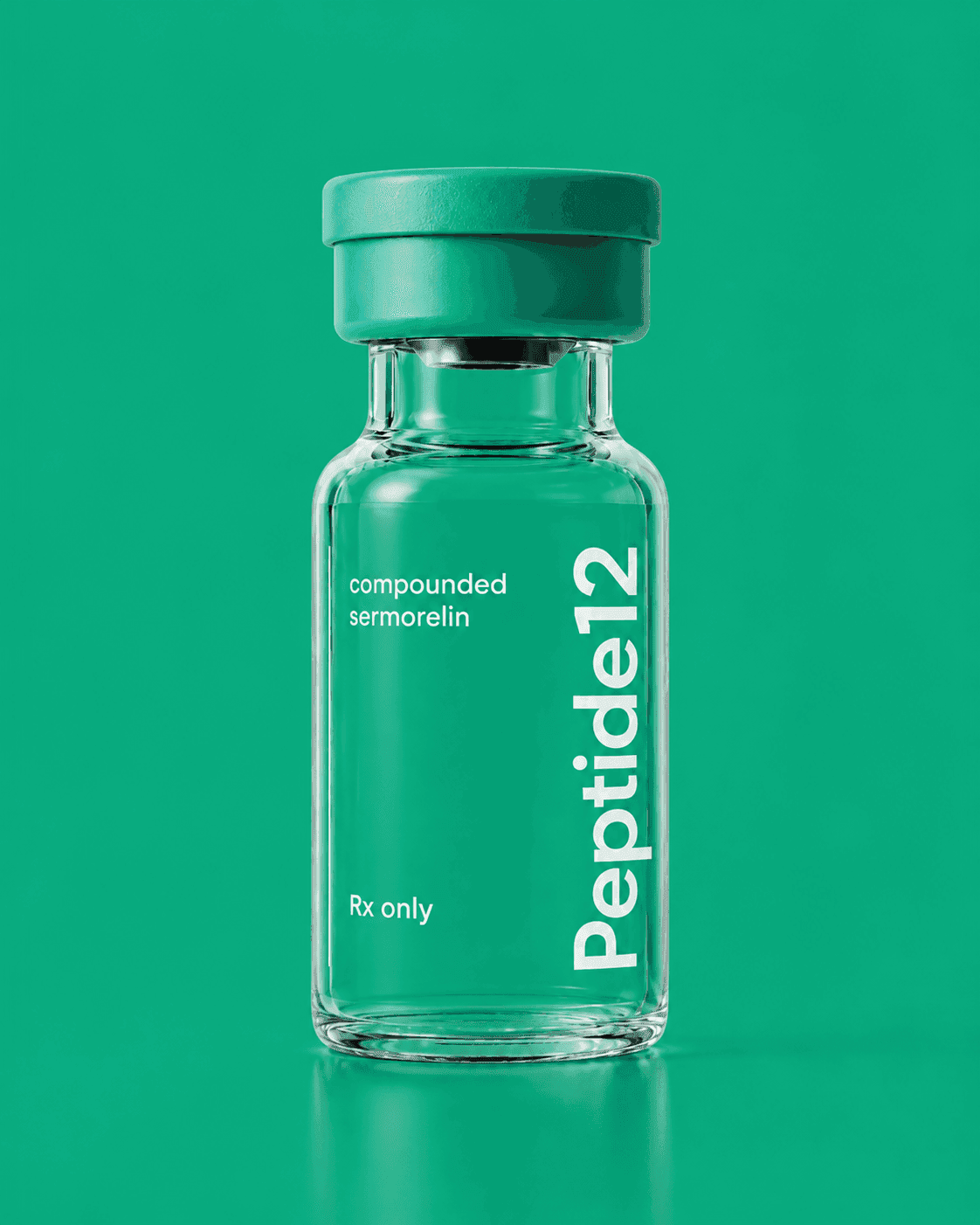
Compounded TB-500
A synthetic peptide related to the active region of thymosin beta-4, a naturally occurring actin-binding protein. Prescribed online by US-licensed doctors and dispensed by state-licensed compounding pharmacies.
- Subcutaneous injection — loading phase, then weekly maintenance
- Compounded by state-licensed pharmacies
- Mechanisms tied to actin regulation, cell migration, and angiogenesis
- Largely preclinical evidence; no insurance required
shipping
doctors
doctor 24/7
- Same price at every dose. No hidden fees.
- Free expedited shipping.
- No membership fees.
- Doctor-led plans, ongoing doctor support.
Why do people explore tb-500 therapy?
Explore a peptide studied for soft-tissue recovery, flexibility, and tissue repair — with honest, preclinical-stage expectations.
Soft-Tissue Recovery
- Muscle & connective tissue
- Recovery support
- Preclinical evidence
Flexibility & Mobility
- Mobility support
- Range of motion
- Alongside rehab
Tissue Repair
- Cell migration themes
- Angiogenesis (animal data)
- Repair-focused
Inflammation Modulation
- Inflammatory signaling
- Cell-survival themes
- Exploratory use
Recover smarter on your terms.
Compounded TB-500 is explored for soft-tissue recovery and tissue repair — a peptide related to your body’s own actin-binding protein, prescribed with honest expectations.
TB-500 is a synthetic peptide related to the active region of thymosin beta-4, a naturally occurring protein that helps regulate actin — the cytoskeletal machinery cells use to migrate and rebuild tissue after injury.
In preclinical models, thymosin beta-4 has been linked to cell migration, angiogenesis, and reduced inflammation during repair, which is why TB-500 is explored for recovery. Human evidence remains limited, so it is best approached as a doctor-supervised, science-based approach to strength.

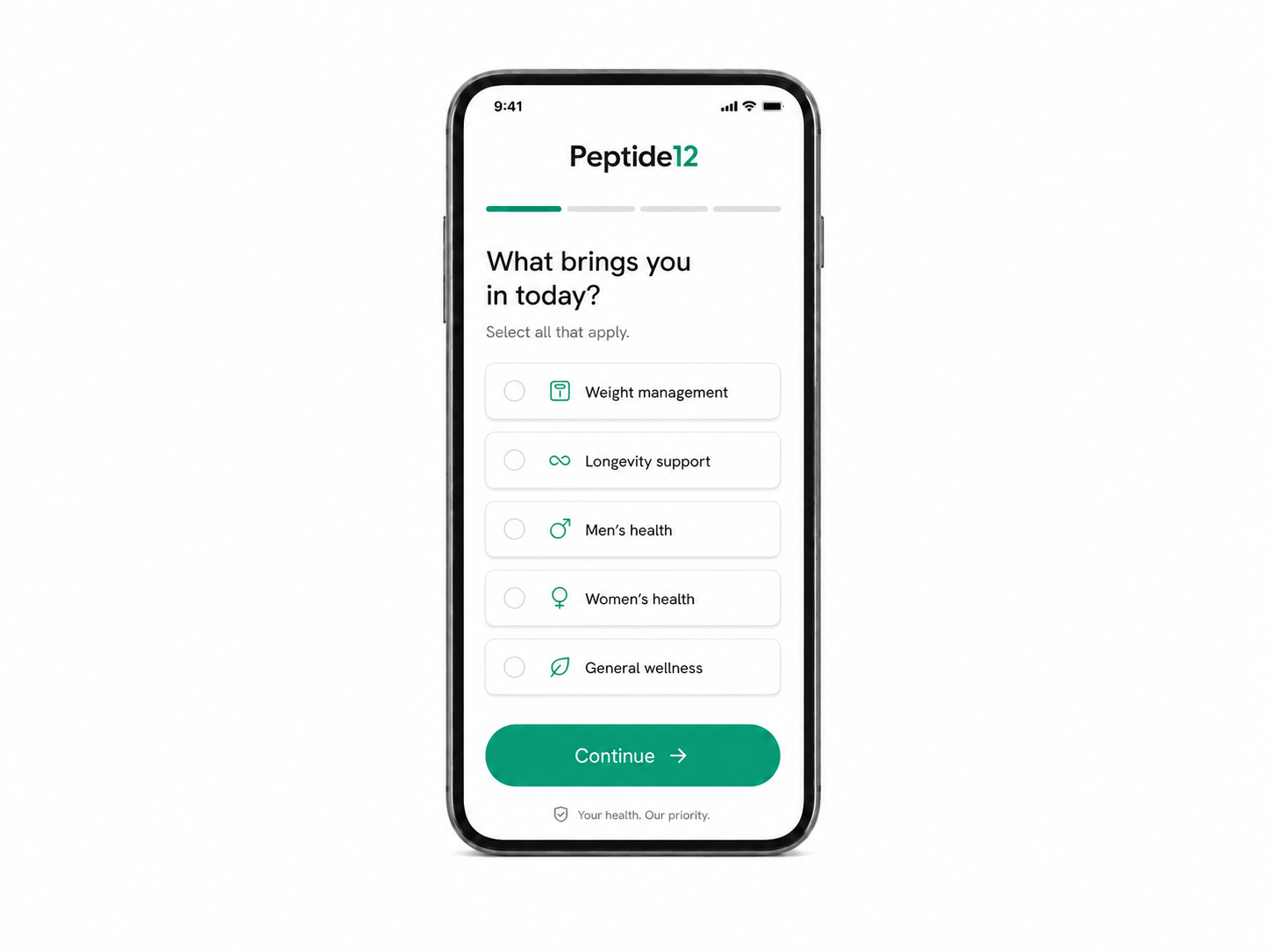
Complete a quick online health intake
STEP
1
Share your health profile online. A US-licensed doctor reviews your fit and decides whether peptide therapy is right for you.
Receive your prescription at your door
STEP
2
If approved, your custom prescription ships free and overnight in temperature-controlled packaging, arriving safely at your home.
Get continuous care from your doctor
STEP
3
Message your care team with response, side-effect, refill, lab, medication, or sport-testing questions so the plan can be reassessed as needed.

Why choose Peptide12?
Patients pick us for clinical rigor, transparent pricing, and care that doesn’t disappear after checkout.
FDA-registered pharmacies
Every prescription is compounded by FDA-registered 503A/503B pharmacies. Batch testing and certificates of analysis available on request.
US-licensed doctors
MDs licensed in your state, not just an order form. Your doctor titrates dosing and answers messages directly.
Transparent pricing
One flat price per protocol. No membership fees, no insurance hassle, no surprise charges. HSA and FSA accepted. Cancel anytime.
Care that doesn’t disappear
Message your doctor through your patient portal whenever you need to. Most replies within hours, never longer than 24.
What patients ask about
Patient feedback on clinician review, pharmacy sourcing, follow-up, and practical support.
Individual experiences vary and do not guarantee eligibility, prescription approval, symptom improvement, or a specific result.
“I appreciated that the doctor was straight with me that the evidence is mostly preclinical. I tried a conservative course for a nagging shoulder and felt recovery was a bit smoother. No miracle claims, just an honest protocol.”
Brandon K.
Boulder, CO
“They asked right away whether I get drug tested before prescribing, which I respected. I don’t compete, so we moved forward. The intake felt like a real medical visit, not a checkout page.”
Marcus D.
Austin, TX
“Loading phase then weekly maintenance, all spelled out. Injection-site reactions were minor and settled within a couple of weeks. Mobility work alongside it felt easier to stick with.”
Anthony P.
Charlotte, NC
“What sold me was the caution. They flagged the cancer-history question and the angiogenesis concern before I even asked. Cold-chain shipping, sealed vial, batch info on the label.”
Renee A.
Denver, CO
“Mid-40s and beat up from years of lifting. I went in with realistic expectations and the team kept them realistic. Recovery between heavy sessions felt a little kinder over the course.”
Priya N.
Phoenix, AZ
“Doctor messaging was same-day and they never overpromised. They framed it as exploratory and time-limited, which is exactly how I wanted to approach a peptide like this.”
Cole W.
Tampa, FL
Frequently asked questions
No. The published evidence for thymosin beta-4 and TB-500 is largely preclinical — cell-culture and animal studies on wound healing, angiogenesis, and tissue repair. Human clinical data are limited, and TB-500 is not FDA-approved for any indication. It should be approached as an exploratory, doctor-supervised option with honest expectations rather than a treatment with established human efficacy.
Yes. Thymosin beta-4 (and TB-500 as a related peptide) is prohibited in sport at all times under the World Anti-Doping Agency (WADA) Prohibited List, category S2 (peptide hormones, growth factors, related substances and mimetics). If you are a competitive or drug-tested athlete, you should not use TB-500 — it can trigger a positive test and an anti-doping violation. Tell your doctor up front if testing applies to you.
Thymosin beta-4 is a 43-amino-acid actin-binding protein found naturally throughout the body and concentrated at sites of injury. TB-500 is a synthetic peptide related to the biologically active region of that protein. The idea is that this fragment may carry forward some of thymosin beta-4’s actin-regulation and cell-migration properties, though how fully it reproduces the parent protein’s biology in humans is not established.
It is most commonly explored for soft-tissue and muscle recovery, flexibility and mobility, and injury repair. These uses trace back to preclinical findings that thymosin beta-4 promotes cell migration, supports angiogenesis, and modulates inflammation during healing. Because the supporting data are mostly from animal models, any benefit in humans is unproven and individual.
TB-500 is given as a subcutaneous injection. Compounded protocols commonly use a loading phase of split doses over the first several weeks, followed by a lower weekly or biweekly maintenance dose, in time-limited courses rather than indefinite use. Dosing is not standardized in published human trials, so your prescribing doctor individualizes it based on your goals, history, and tolerance.
Common reports are mild and local — injection-site reactions, temporary fatigue, or a brief headache. The most important theoretical concern is that thymosin beta-4 promotes angiogenesis (new blood-vessel growth), which is why it is avoided in anyone with a personal or family history of cancer or active malignancy. Long-term human safety data are lacking, so it is used cautiously, in limited courses, and you should report any unusual symptom to your doctor.
Some patients ask about pairing recovery-oriented peptides, but any combination should be doctor-supervised and grounded in your goals and history rather than internet protocols. Given the limited human evidence for TB-500 itself, our clinicians generally prefer a conservative, single-agent course first so any effects — or side effects — are easier to attribute.
Peptide12 partners with state-licensed compounding pharmacies that hold state and federal licensure and undergo regular USP <797> sterility audits. Every batch is third-party tested for identity, potency, sterility, and endotoxin before release. Compounded TB-500 is not FDA-approved as a finished drug product but is prepared from regulated active ingredients under an individualized prescription.
No. Compounded medications are typically not covered by commercial insurance, and exploratory peptides like TB-500 are not reimbursed. Some patients use HSA or FSA funds; your care team can help you check eligibility and walk you through documentation if needed.
Supporting Studies
- 1.Malinda et al. — Thymosin beta4 accelerates wound healing (J Invest Dermatol, 1999) — preclinical
- 2.Philp et al. — The actin binding site on thymosin beta4 promotes angiogenesis (FASEB J, 2003) — preclinical
- 3.Dubé & Smart — Thymosin β4 and the vasculature: roles in development, repair and protection against disease (Expert Opin Biol Ther, 2018) — review
- 4.Xing et al. — Progress on the function and application of thymosin β4 (Front Endocrinol, 2021) — review
- 5.Peng et al. — Thymosin-β4 prevents cardiac rupture and improves cardiac function in mice with myocardial infarction (Am J Physiol Heart Circ Physiol, 2014) — preclinical
- 6.FDA — Pharmacy Compounding Advisory Committee, notice of meeting and public docket (Federal Register, 2026)