Retatrutide trial results explained: what the 48-week data can and cannot mean
Retatrutide trial results are promising research data, not an FDA approval and not a patient dosing plan. The key 48-week phase 2 obesity trial reported substantial average weight reduction in studied adults, but retatrutide remains investigational and should not be sold to patients as a routine prescription or research-chemical shortcut.
The safest way to read the headlines is this: the numbers explain why clinicians, regulators, and patients are watching retatrutide. They do not prove that a no-prescription vial is safe, legal, effective, or appropriate for an individual person today.
The short answer: what results made retatrutide newsworthy?
Retatrutide, also known as LY3437943, is an investigational medication designed to activate GIP, GLP-1, and glucagon receptor pathways. A phase 2 randomized, double-blind, placebo-controlled trial in adults with obesity or overweight plus a weight-related condition evaluated multiple retatrutide dose groups against placebo over 48 weeks.
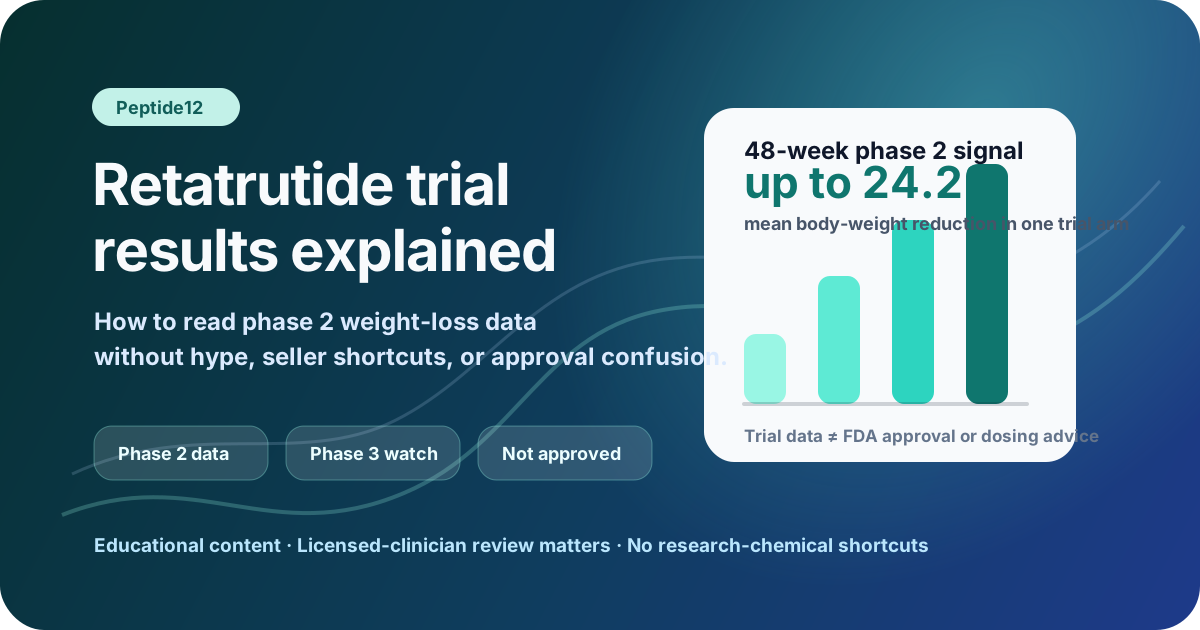
The published trial reported dose-related average body-weight reductions. In the highest studied dose arm, the least-squares mean percentage change in body weight was 17.5% at 24 weeks and 24.2% at 48 weeks. Placebo was 1.6% at 24 weeks and 2.1% at 48 weeks.
Those percentages explain the attention. They should also be interpreted with guardrails:
- phase 2 trials are designed to learn about dose response, safety, and efficacy signals;
- the trial enrolled selected participants under a protocol, not every online patient;
- average results do not predict an individual result;
- longer phase 3 studies and regulatory review are separate steps;
- no trial result makes research-use retatrutide a safe consumer product.
What the 24-week and 48-week numbers mean
The trial's primary endpoint was percent change in body weight from baseline to week 24. Week 48 was an important secondary endpoint. The dose-response pattern is why the study became widely discussed.
| Study result | Conservative interpretation |
|---|---|
| Retatrutide groups lost more average weight than placebo at 24 weeks | The study showed a strong efficacy signal that justified larger research programs. |
| Higher studied dose groups had larger average reductions | Dose response is clinically interesting, but it also makes tolerability and escalation questions important. |
| The 12 mg arm reported 24.2% mean reduction at 48 weeks | A headline number should be read as a trial average, not a guaranteed patient outcome. |
| Participants had trial screening and follow-up | Trial safety monitoring is not the same as buying a vial from an online seller. |
For a patient, the practical question is not "How do I copy the study?" It is "What approved, clinician-reviewed treatment options are appropriate for my history now, and how should emerging research be followed safely?"
Why phase 3 still matters
Phase 3 trials are larger and usually designed to answer questions that phase 2 studies cannot fully settle. ClinicalTrials.gov lists phase 3 retatrutide studies, including a study in participants with severe obesity and established cardiovascular disease with an 80-week primary outcome window.
That matters because obesity medications are not judged only by early weight-loss averages. Regulators and clinicians also care about:
- durability of weight reduction;
- discontinuation rates and tolerability;
- gastrointestinal side effects and dehydration risk;
- gallbladder, pancreas, kidney, heart-rate, glucose, and cardiovascular questions;
- pregnancy and reproductive-health cautions;
- interactions with diabetes medications or other weight-loss drugs;
- manufacturing quality, labeling, and post-approval monitoring if a product is ever approved.
Until those steps are complete and FDA labeling exists, retatrutide should be described as investigational.
Safety signals should not be minimized
In the phase 2 obesity publication and Lilly's release, gastrointestinal side effects were emphasized as common with retatrutide, often during dose escalation. That is not surprising in incretin-based treatment research, but it should not be treated casually.
A clinician-led safety conversation would likely include:
- nausea, vomiting, diarrhea, constipation, reflux, and hydration planning;
- symptoms that could suggest gallbladder disease or pancreatitis;
- kidney risk if vomiting or diarrhea causes dehydration;
- glucose-lowering medications and hypoglycemia risk;
- personal or family history that may matter for incretin-drug labeling, such as medullary thyroid carcinoma or MEN2 questions where relevant;
- pregnancy, attempts to conceive, or breastfeeding;
- eating-disorder history, unsafe weight goals, or rapid-loss pressure;
- whether the patient would have met or been excluded from a clinical trial.
This is why retatrutide headlines should lead to clinician questions, not self-treatment.
Why online retatrutide offers are a red flag
FDA has warned about unapproved GLP-1 drugs used for weight loss and explains that compounded drugs are not FDA-approved before marketing. FDA's current GLP-1 warning also names retatrutide among drugs that cannot be used in compounding under federal law because they are not components of FDA-approved drugs and have not been found safe and effective for any condition.
Be skeptical if a website or social post:
- sells "Reta" or retatrutide without a licensed prescriber;
- calls the product "research use only" while describing personal weight-loss use;
- implies retatrutide is FDA-approved, compounded, or equivalent to an approved product;
- publishes dosing charts for consumers based on a clinical trial;
- uses guaranteed-result claims or before-and-after pressure;
- hides pharmacy, manufacturer, adverse-event, storage, or quality information;
- encourages stacking retatrutide with semaglutide, tirzepatide, stimulants, or supplements without medical review.
A legitimate medical conversation should not require buying an investigational drug.
How to compare retatrutide results with current GLP-1 care
Retatrutide research belongs in the broader GLP-1 and GIP/GLP-1 conversation, but it should not replace current medical decision-making.
Currently available care discussions may include FDA-approved branded products such as Wegovy, Ozempic, Zepbound, and Mounjaro for their labeled uses, plus individualized compounded prescriptions only when legally appropriate and clinically justified. A clinician should explain the difference between an FDA-approved finished drug product, a compounded prescription, and an investigational medication.
Useful Peptide12 resources:
- Retatrutide FDA approval status guide
- Retatrutide vs semaglutide
- Retatrutide vs tirzepatide
- GLP-1 weight-loss options
- GLP-1 shortage status check
- Fake GLP-1 online pharmacy checklist
Questions to ask a clinician after reading retatrutide results
If retatrutide trial results are what brought you into weight-loss research, use the interest to ask safer questions:
- Do I meet medical criteria for obesity or metabolic treatment? BMI, weight-related conditions, prior attempts, labs, and goals matter.
- Which approved options fit my history today? Semaglutide, tirzepatide, and other medications have different labels, contraindications, access paths, and costs.
- What side effects should I plan for? Ask what symptoms should trigger portal messaging, urgent care, or stopping until reviewed.
- How will medication quality be verified? Clarify whether the product is branded, compounded when appropriate, or investigational research only.
- What follow-up happens after starting? Weight, symptoms, labs, refills, dose changes, and maintenance should not be left to social media.
- How should I follow retatrutide updates? Prefer FDA, ClinicalTrials.gov, peer-reviewed publications, and reputable medical sources over seller pages.
Bottom line
Retatrutide trial results are worth watching because the phase 2 weight-loss data were strong and phase 3 research is underway. But the correct patient takeaway is caution, not shopping. Retatrutide is investigational, not FDA-approved for routine weight-loss prescribing, and not a legal no-prescription shortcut.
If you are interested in GLP-1 or GIP/GLP-1 treatment, the safer next step is a licensed-clinician review of current approved or legally appropriate options, side-effect risks, pharmacy sourcing, follow-up, and realistic goals.
FAQs
What did the retatrutide phase 2 obesity trial report?
The published phase 2 trial reported dose-related average body-weight reductions over 24 and 48 weeks in adults with obesity or overweight plus a weight-related condition. At 48 weeks, the highest studied dose arm reported a 24.2% least-squares mean reduction versus 2.1% with placebo.
Do retatrutide trial results mean it is FDA-approved?
No. Trial results are evidence for regulators and clinicians to evaluate, but they are not FDA approval. Retatrutide remains investigational and should not be presented as an approved prescription, compounded shortcut, or routine telehealth checkout option.
What are the main safety questions from retatrutide studies?
Patients should ask about gastrointestinal side effects, dehydration, gallbladder or pancreas symptoms, glucose-lowering medications, heart-rate findings, pregnancy planning, contraindications, and why trial eligibility may not match their own medical history.
What should patients do if they are interested in retatrutide?
Do not buy retatrutide from a research-chemical or no-prescription seller. Ask a licensed clinician about currently approved or legally appropriate options, contraindications, pharmacy sourcing, follow-up, and how to track legitimate FDA or ClinicalTrials.gov updates.
Sources
- PubMed: Triple-Hormone-Receptor Agonist Retatrutide for Obesity — A Phase 2 Trial
- ClinicalTrials.gov: NCT04881760, Phase 2 study of LY3437943 in obesity or overweight
- ClinicalTrials.gov: NCT05882045, Phase 3 retatrutide study in obesity and cardiovascular disease
- Lilly: Phase 2 retatrutide results published in The New England Journal of Medicine
- FDA: FDA’s concerns with unapproved GLP-1 drugs used for weight loss
- FDA: Compounding and the FDA, Questions and Answers