Retatrutide phase 3 results: what TRIUMPH-1 can and cannot tell patients
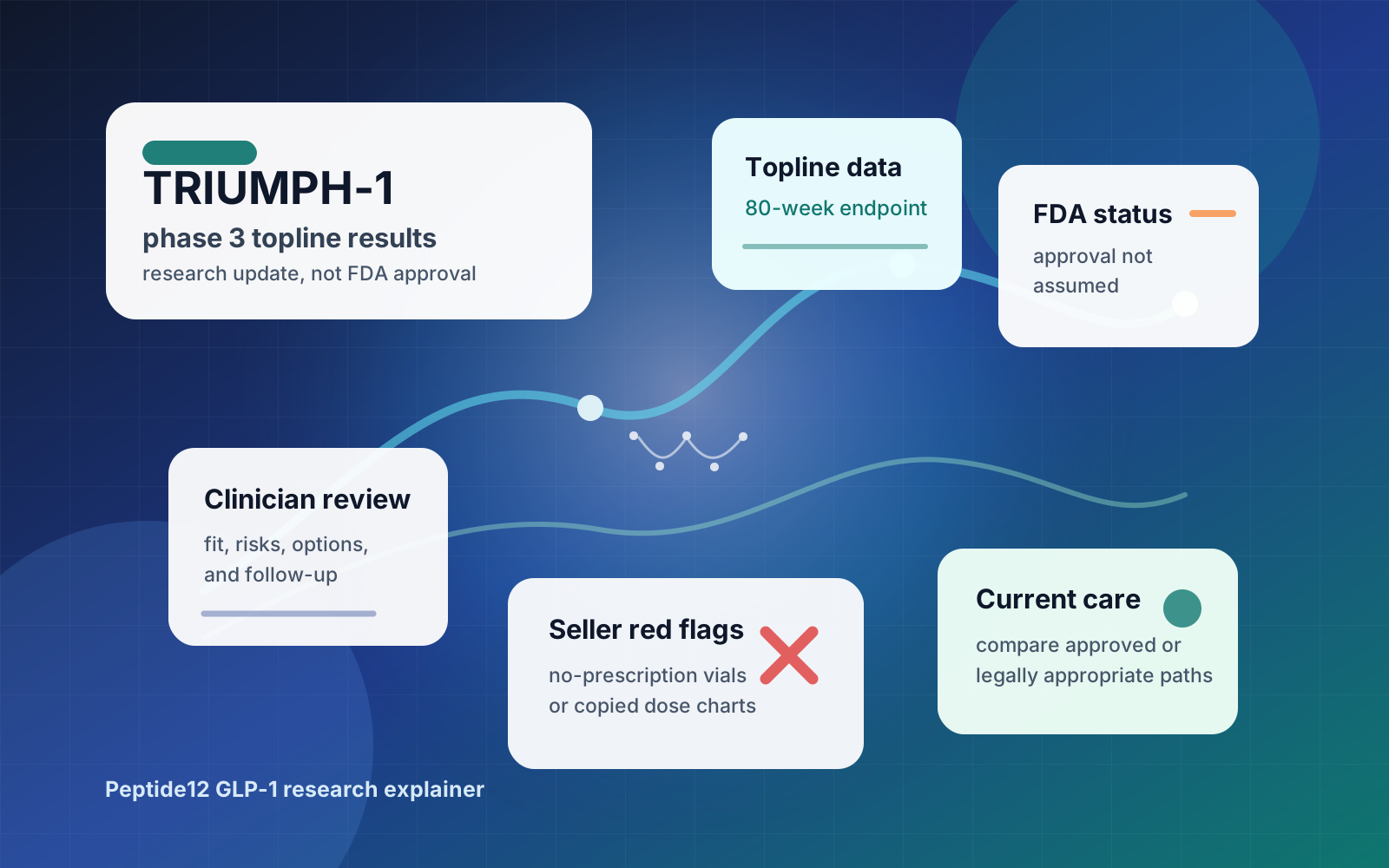
Retatrutide phase 3 results are important weight-loss research news, but they are not the same thing as FDA approval or a green light to buy "Reta" online. Lilly announced positive topline TRIUMPH-1 results in May 2026. That announcement should be read as a research update that still needs careful clinical, regulatory, and safety context.
The practical patient takeaway is cautious: retatrutide remains investigational unless and until FDA approves it. If the headline made you interested in GLP-1 or GIP/GLP-1 care, use it to ask a licensed clinician about currently approved or legally appropriate options, not to copy trial arms or buy research-use vials.
The short answer: what changed with TRIUMPH-1?
TRIUMPH-1 is a phase 3 study of retatrutide, also known as LY3437943, in adults without type 2 diabetes who have obesity or overweight. ClinicalTrials.gov describes the study as a randomized, double-blind, placebo-controlled trial evaluating once-weekly retatrutide against placebo, including subsets of participants with knee osteoarthritis or obstructive sleep apnea.
In May 2026, Lilly reported topline data from TRIUMPH-1. The company said all three studied retatrutide doses met the primary and key secondary obesity endpoints at 80 weeks. Lilly reported that the highest studied dose arm had 28.3% average body-weight loss at 80 weeks and that 45.3% of participants in that arm achieved at least 30% weight loss.
Those numbers explain why patients are searching for retatrutide. They do not mean:
- FDA has approved retatrutide;
- Peptide12 offers or compounds retatrutide;
- a trial dose can be copied as a patient plan;
- a no-prescription seller is legitimate;
- phase 3 topline data answers every long-term safety and outcomes question.
How to read sponsor-reported topline results
Topline trial announcements are useful, but they are not the full medical record. A press release may report the primary headline results before the complete peer-reviewed publication, FDA review package, product labeling, and post-approval monitoring plan exist.
A safer way to interpret the TRIUMPH-1 announcement is:
| Topline item | Patient-safe interpretation |
|---|---|
| Phase 3 results were positive | Larger research progressed beyond phase 2, but FDA review is still a separate step. |
| Weight-loss averages were high | Trial averages are not guaranteed individual results. Eligibility, follow-up, adherence, side effects, and discontinuation matter. |
| Multiple dose arms were studied | Trial arms are research protocol details, not patient instructions or online dose charts. |
| GI effects were described as common | Tolerability, hydration, gallbladder, pancreas, kidney, glucose, and heart-rate questions still matter. |
| Cardiometabolic measures improved | Risk-factor changes are encouraging but should not replace long-term cardiovascular and kidney outcomes evidence. |
ClinicalTrials.gov also lists TRIUMPH-Outcomes, a large phase 3 cardiovascular and kidney outcomes study of retatrutide in adults with obesity plus ASCVD and/or chronic kidney disease. That record helps explain why long-term outcomes questions remain important even after a strong obesity-efficacy announcement.
Does phase 3 success mean FDA approval is next?
Not automatically. Phase 3 results can support a regulatory submission, but FDA approval depends on the agency's review of safety, efficacy, manufacturing quality, labeling, proposed indication, risk management, and the total evidence package.
Patients should verify approval status from official sources such as FDA announcements, Drugs@FDA, and approved labeling. Seller pages, countdown posts, influencer clips, and "Reta is basically approved" claims are not authoritative.
As of this article's update date, retatrutide should be described as investigational. Peptide12 educational content should not imply that retatrutide is an available Peptide12 product, a compounded alternative, or a routine telehealth checkout option.
How TRIUMPH-1 differs from the earlier phase 2 data
The earlier published phase 2 obesity trial made retatrutide widely discussed because it reported dose-related average weight reductions over 24 and 48 weeks. In that study, the highest studied dose arm reported 24.2% least-squares mean body-weight reduction at 48 weeks versus 2.1% with placebo.
TRIUMPH-1 is later-stage evidence with a larger phase 3 design and an 80-week primary body-weight endpoint. But the same interpretation rule applies: results explain why regulators and clinicians are interested; they do not turn an investigational compound into an approved or patient-ready product.
Safety questions patients should not skip
Retatrutide belongs in the incretin-medication research conversation, but patients should not treat it as a stronger shopping version of semaglutide or tirzepatide. A clinician-led discussion would likely cover:
- nausea, vomiting, diarrhea, constipation, reflux, and hydration planning;
- symptoms that could suggest gallbladder disease or pancreatitis;
- kidney risk if vomiting or diarrhea causes dehydration;
- glucose-lowering medications and hypoglycemia risk;
- heart-rate findings and cardiovascular history;
- pregnancy planning, breastfeeding, or reproductive-health timing;
- personal or family history relevant to incretin-drug labeling, such as medullary thyroid carcinoma or MEN2 questions where applicable;
- whether a patient would have met or been excluded from the trial;
- what monitoring and follow-up would be required if an approved product ever becomes available.
The stronger the headline, the more important it is to separate evidence from self-treatment.
Online retatrutide and "Reta" seller red flags
FDA's current GLP-1 warning states that retatrutide cannot be used in compounding under federal law because it is not a component of an FDA-approved drug and has not been found safe and effective for any condition. FDA also warns that unapproved GLP-1 products do not undergo FDA review for safety, effectiveness, or quality before marketing.
Be cautious if a website or social post:
- sells "Reta" or retatrutide without a licensed prescriber;
- calls it "research use only" while giving human weight-loss instructions;
- claims retatrutide is FDA-approved, compounded, or equivalent to a branded medication;
- publishes patient dose charts copied from trial arms;
- encourages stacking with semaglutide, tirzepatide, stimulants, or supplements;
- hides pharmacy, manufacturer, storage, lot, adverse-event, or follow-up information;
- uses guaranteed results, before-and-after pressure, or countdown-to-approval language.
A legitimate medical conversation should not require buying an investigational drug from a research-chemical seller.
How to compare retatrutide news with current GLP-1 care
Retatrutide may become part of future obesity-medicine discussions if FDA review eventually supports approval, but patients making decisions today should start with currently available care paths.
Those discussions may include FDA-approved branded products such as Wegovy, Ozempic, Zepbound, and Mounjaro for their labeled uses, plus individualized compounded prescriptions only when legally appropriate and clinically justified. A clinician should explain the difference between an FDA-approved finished drug product, a compounded prescription, and an investigational product.
Useful Peptide12 resources:
- Retatrutide FDA approval status
- Retatrutide trial results explained
- Retatrutide vs semaglutide
- Retatrutide vs tirzepatide
- Retatrutide online seller red flags
- GLP-1 weight-loss options
Questions to ask before acting on the headline
If TRIUMPH-1 brought you into GLP-1 research, bring these questions to a qualified clinician instead of a seller checkout page:
- Do I meet criteria for medical weight-management care? BMI, medical history, medications, labs, pregnancy context, and goals matter.
- Which approved or legally appropriate options fit now? Semaglutide and tirzepatide pathways have different labels, evidence, costs, and access paths.
- What side effects should I plan for? Ask what symptoms require portal messaging, urgent care, or holding medication until reviewed.
- How is pharmacy quality verified? Clarify branded versus compounded status, prescription labels, storage, and adverse-event reporting.
- How should I follow retatrutide updates? Prefer FDA, ClinicalTrials.gov, peer-reviewed publications, and reputable medical sources over seller pages.
Bottom line
Retatrutide phase 3 TRIUMPH-1 results are worth watching because Lilly reported substantial average weight loss over 80 weeks in a large study. But the safe patient conclusion is not "buy Reta now." It is that retatrutide remains investigational while regulators and clinicians evaluate the full evidence.
If you are interested in GLP-1 or GIP/GLP-1 care, the safer next step is clinician review of current approved or legally appropriate options, contraindications, side-effect planning, pharmacy sourcing, follow-up, and realistic goals.
FAQs
Did TRIUMPH-1 mean retatrutide is FDA-approved?
No. TRIUMPH-1 is a phase 3 clinical trial and Lilly's May 2026 announcement was a sponsor-reported topline result. FDA approval requires regulatory review and an official FDA approval source. Retatrutide remains investigational unless FDA says otherwise.
What did Lilly report from the retatrutide phase 3 TRIUMPH-1 trial?
Lilly reported that all three studied retatrutide doses met the primary and key secondary obesity endpoints at 80 weeks, with the 12 mg study arm reporting 28.3% average body-weight loss and 45.3% of participants achieving at least 30% weight loss. The full peer-reviewed and FDA-reviewed record can differ from a topline press release.
Can patients get retatrutide from a compounding pharmacy?
FDA's current GLP-1 warning states that retatrutide cannot be used in compounding under federal law because it is not a component of an FDA-approved drug and has not been found safe and effective for any condition. Avoid no-prescription or research-chemical sellers.
What should patients ask a clinician after reading retatrutide phase 3 news?
Ask which currently approved or legally appropriate options fit your medical history, how semaglutide or tirzepatide options compare, what side effects and contraindications apply, how pharmacy quality is verified, and how to monitor official FDA and ClinicalTrials.gov updates.
Sources
- Lilly: Retatrutide TRIUMPH-1 phase 3 topline results
- ClinicalTrials.gov: NCT05929066, TRIUMPH-1 retatrutide phase 3 study
- PubMed: Triple-Hormone-Receptor Agonist Retatrutide for Obesity — A Phase 2 Trial
- ClinicalTrials.gov: NCT06383390, TRIUMPH-Outcomes retatrutide cardiovascular and kidney outcomes study
- FDA: FDA’s concerns with unapproved GLP-1 drugs used for weight loss
- FDA: Drugs@FDA search portal